Is Landmannalaugar Worth It?
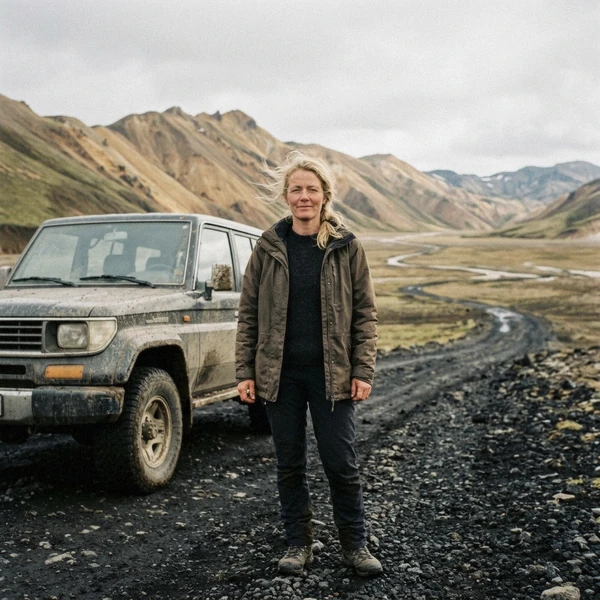
Is Landmannalaugar worth it? Yes, if you have a full day to spend and you are willing to walk for two or three hours of it. No, if you are hoping for a scenic drive with photo stops, because the road is four hours of gravel each way and the reward is on foot. That is the whole answer, and the rest of this page is the arithmetic behind it: what a day costs as of July 2026, what you see for the money, and the four honest reasons people come back disappointed.
Quick answer
Landmannalaugar is worth it if you will walk. A guided day from Reykjavik costs $189 to $395 per person and runs 11 to 14 hours, of which roughly seven are driving and three are yours in the valley. What you get for that is rhyolite mountains banded in ochre, rust and green, a 550-year-old obsidian lava field you walk across, and a free hot spring at 36 to 40°C to finish in. Anyone unwilling to leave the vehicle will find the day long and the payoff thin.
Key takeaways
- Guided day tours run $189 to $395 per person; the most reviewed is $190.67, rated 4.7 from 708 travellers
- The single best reason to go: nowhere else in Iceland looks like this, and the colour is in the rock rather than in the light
- The biggest honest downside: about seven of the eleven to fourteen hours are spent in a seat on gravel
- Skip it if you cannot walk two to three hours on uneven volcanic ground, or if the highlands are your only free day and rain is forecast
- The season is short: roughly 20 June to 15 September, set each year by the road authority after it inspects the route
- Book early in your trip rather than on your last free day, because departures do get cancelled for weather
The Short Answer
Worth it if you will walk, not worth it if you will not
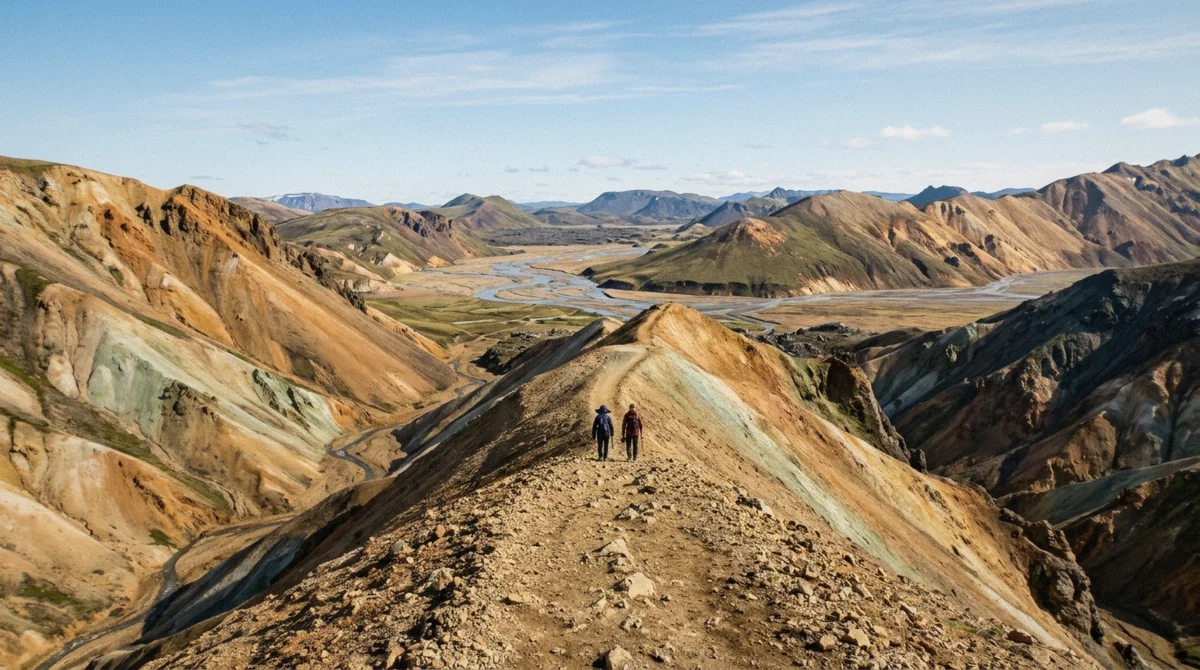
The valley is a walking destination that happens to sit four hours from the capital. From the campsite, the ground rises immediately into an obsidian lava field and then into rhyolite slopes streaked ochre, rust, green and grey, and none of that reads properly through a window. The people who come back saying it was the best day of their trip walked for two or three hours. The people who come back saying it was a long drive stayed near the car park.
That is not a hedge, it is the actual fork. Decide which of the two you are before you book, because the price and the day length are the same either way.
If the walking is the appeal, the full comparison of guided day tours sets out which operators schedule three hours on the trail and which schedule one.
Worth it if
Three trip contexts where this day pays for itself.
- You have a free day between 20 June and 15 September and can start it before seven in the morning
- You are comfortable walking two to three hours on loose volcanic ground with a hill in it
- You have already seen the Golden Circle and the south coast and want a day that looks nothing like either
Skip it if
Three contexts where the honest answer is spend the money elsewhere.
- Sitting in a vehicle for seven hours is the part of a day trip you dread, because that is most of this one
- You have mobility problems or low fitness: several operators exclude both outright, and the ground gives no easy alternative
- This is your one free day and the forecast is wind and rain, in which case the south coast waterfalls deliver more in worse weather
What It Actually Costs
Every way in, priced
Prices last verified in July 2026. Guided figures are per person and include the driving; the self-drive line is the vehicle plus the fees, split across however many of you there are.
| Option | Typical price | Duration | Best for |
|---|---|---|---|
| Cheapest guided day | From $189 | 11 hours | First visit on a budget, super jeep, one canyon stop added |
| Most reviewed guided day | From $190.67 | Up to 14 hours | Three hours of guided walking, facility fees covered |
| Waterfall minibus | From $220 | 13 to 14 hours | Adding Háifoss, Hjálparfoss and the crater lakes to the day |
| Small-group super jeep | From $298 | 11 to 12 hours | Six passengers, flexible stops, worse weather |
| Short day from Hella | From $395 | 8 hours | Anyone already staying on the south coast |
| Scheduled highland bus | From 12,220 ISK one way | About 5 hours in the valley | Hikers and campers on their own schedule, no guide |
| On your own by 4x4 | Rental plus 1,500 ISK parking | As long as you like | Experienced highland drivers travelling in a group |
What the spread actually buys
A typical couple books somewhere between $189 and $230 each and spends nothing else all day except lunch they brought with them. The jump to $298 or $395 buys a smaller group and a shorter drive, not a different valley: every option on that table parks in the same gravel car park.
The self-drive line looks cheapest until you add it up honestly. A 4x4 that is genuinely allowed on F-roads runs from about $47 a day in a good week and far more in August, fuel sits around 210 to 220 ISK a litre, and the parking fee is 1,500 ISK for a car of up to five seats. Two people driving themselves rarely beat two tour tickets. Four people do. What a Landmannalaugar trip costs in full works through both sides with the hut and camping fees included.
What You Get for the Money
The drive in
We leave Reykjavik between seven and eight and spend the first ninety minutes on the Ring Road, which is farmland and horses and the occasional glimpse of Hekla. The last town is Hella, where every operator stops for a quarter of an hour and where you buy anything you forgot.
After Hella the tarmac ends. The next seventy-five minutes are black gravel, river crossings and a landscape that loses its plant life a few kilometres at a time until there is nothing but ash, moss and rock. This stretch is where the vehicle you paid for stops being a detail. Two fords sit on F224 within sight of the campsite, and the water level in them changes through the afternoon.
The three hours on the ground
The campsite sits at 550 m in the Fjallabak Nature Reserve, on a flat gravel plain with a mountain hut, a scatter of tents and a warden. Walk five minutes and you are on Laugahraun, a field of black obsidian pushed out by an eruption around 1477 and still bare enough that almost nothing grows on it. The rock is glassy and sharp, which is why every operator lists hiking boots rather than suggesting them.
Most guided groups climb Brennisteinsalda from there: 6.5 km return, two to three hours, about 200 m of ascent to a summit at 855 m past sulphur vents that hiss and stain the ground yellow. The stronger option is Bláhnúkur at 945 m, roughly 320 m of climbing on loose scree with a narrow ridge near the top, which guides only commit to when the wind is down.
- Rhyolite slopes in ochre, rust, pale green and grey, with black obsidian seams through them
- Grænagil, the green-walled gorge between the lava field and Bláhnúkur
- Active sulphur vents on the Brennisteinsalda flank, yellow and orange crusted
- Hekla on the western skyline when the cloud lifts
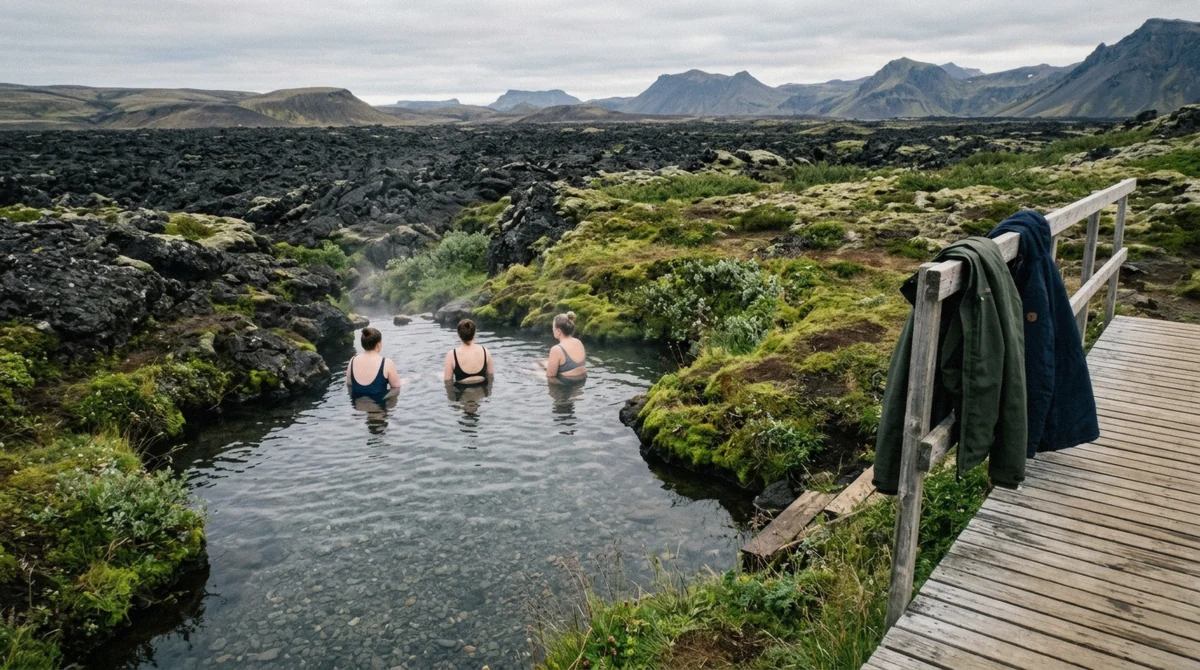
- The People's Pool at the lava edge, 36 to 40°C, free to bathe in
What the ticket covers and what it does not
Every guided option covers the vehicle, the driver and the guide, and most carry Wi-Fi for the road. Three of the nine state that the Landmannalaugar parking and facility fee is included; one states plainly that entry to the bathrooms, showers and hot spring is at your own expense, and the rest say nothing either way.
Not one of them feeds you. Food and drink sit in the excluded column on every listing, including the two that mention lunch in the same block, and there is no shop, café or vending machine anywhere in the valley. Bring lunch from Reykjavik and treat the Hella stop as coffee.
The Honest Downsides
Seven of the hours are driving
An 11 to 14 hour day buys three to four hours on the ground. That ratio is the single most common complaint in the reviews, and no operator can fix it, because the valley is 180 km from Reykjavik with the last 40 on gravel. Starting from Hella instead cuts about three hours out of the total.
The last stretch of road is genuinely rough
Reviewers warn each other about it in plain language, one calling it a bumpy road and advising motion sickness solutions before you set off. Take something before Hella rather than after.
Weather rewrites the day, and sometimes cancels it
July highs in the valley average around 10°C with lows near 5°C, and rain falls on roughly a third of days. Wind on the ridge closes Bláhnúkur regularly, and a bad enough forecast closes the road. Book the highlands early in your trip so a cancellation still leaves you a second chance, and see what actually cancels a departure.
Peak July can be busy at the pool and the car park
The valley is not crowded by European standards, but the hot spring at three in the afternoon in late July has more people in it than the photographs suggest. Walking first and bathing last puts you there as the day groups start leaving.
Nothing is sold there, including a hot drink
No café, no kiosk, no vending machine, and the shower block charges 1,100 ISK. Arrive with lunch, water and cash or a card, or spend the afternoon slightly hungry.
The Balance Sheet
What we genuinely like
- A landscape with no equivalent elsewhere in Iceland: the colour sits in the rock, so it works in flat light as well as in sun
- A free geothermal pool at 36 to 40°C at the end of the walk, with no ticket and no queue system
- Marked trails that suit an average walker: the standard route is 6.5 km with 200 m of ascent
- Guided prices start below every other highland day trip on sale at $189
- Every guided option cancels free up to 24 hours ahead with nothing paid at booking
The honest downsides
- Roughly seven of eleven to fourteen hours are spent driving
- The final 40 km are gravel and river crossings, which is uncomfortable if you are prone to motion sickness
- A twelve-week season, roughly 20 June to 15 September, with both ends moving by a fortnight year to year
- No food, drink or shelter for sale in the valley
- Wind closes the best ridge walk more often than visitors expect
Who it's NOT for: Anyone who wants a scenic drive with short photo stops, anyone with mobility problems or low fitness, and anyone whose only free day comes with a forecast of rain and strong wind.
Is It Worth It Without Hiking?
Honestly, only just
This is the question people ask most often on forums, and the answer nobody wants to hear is that the day loses most of its value. From the car park you can see the mountains, walk twenty minutes onto the edge of the lava field, and sit in the hot spring for an hour. That is a pleasant afternoon and a long drive.
There is a real middle option, though. The flat path along the base of the lava field toward Grænagil takes about forty minutes each way, gains almost nothing in height, and puts you between the obsidian and the green gorge walls. If you cannot climb, ask your guide for that route rather than staying at the vehicle.
The other honest answer is the scheduled highland bus: it gives you five hours rather than three, which turns a slow day into a comfortable one for anyone moving at their own pace.
Landmannalaugar or the Day Trip You Would Do Instead
The four day trips people choose between
Almost nobody books this in isolation. It competes with the three other full days out of Reykjavik, and the comparison below is the one worth making before you spend the money. Distances are one way from the capital.
| Day trip | Driving, one way | Time on foot | What it gives you | Weather risk |
|---|---|---|---|---|
| Landmannalaugar | 3.5 to 4 hours, last 40 km gravel | 2 to 3 hours | Rhyolite colour, obsidian, a free hot spring | High: road closes, ridge closes for wind |
| Golden Circle | 1 to 1.5 hours, paved | Under an hour | Geysir, Gullfoss, the rift at Þingvellir | Low: everything works in rain |
| South coast | 2 to 3 hours, paved | 30 to 60 minutes | Waterfalls, black sand, a glacier front | Low to medium: wind closes some paths |
| Þórsmörk | 2.5 to 3 hours, river crossings | 2 to 4 hours | Green sheltered valleys between three glaciers | Medium: fords, but trees give shelter |
How to read that table
If you have one free day and it is raining, take the south coast. If you have one free day and it is clear, this is the better use of it, because the Golden Circle sights hold up in any weather and these mountains do not.
The honest ranking for a week-long first trip is south coast, then Golden Circle, then here. On a second visit, or a trip of ten days or more, the order flips: this is the day that does not look like anybody else's Iceland photographs.
When It Is Worth It Most
July and early August, in the morning
The road is reliably open, the snow has gone out of the gullies, and daylight is long enough that a 14-hour day never runs into darkness. Late June is the gamble at the front of the season, and the second half of September is the gamble at the back.
Morning beats afternoon on the ground for two reasons: the river crossings are lower before the day's meltwater arrives, and the hot spring is emptier before the day groups converge on it. Guided departures leave between seven and eight for exactly that reason.
The month-by-month picture, including what shifts either end of the season, is in the best time to visit Landmannalaugar.
Which Way In Suits You
If You are based in Reykjavik and want the most walking for the money
The $190.67 guided hike, which schedules three hours on the trail and covers the facility fees
If You are on the cheapest possible budget
The $189 super jeep day, which is the lowest price into the valley of any kind
If You want the valley at your own pace, with no guide
The scheduled highland bus, about five hours on the ground for around 12,220 ISK one way
If You are already sleeping on the south coast
The 8-hour day out of Hella, which removes roughly three hours of driving
If You are travelling with children under ten
One super jeep takes children from age six; most other operators start at eight or ten
If You cannot walk on uneven ground
Spend the day on the south coast instead, where the sights sit within metres of a car park
Who Should Go, and Who Should Not
Families
Minimum ages across the nine guided options run from six to ten, and they track the length of the walk rather than the price. A six-year-old on the shortest jeep day will manage; a ten-year-old on the three-hour hike will enjoy it. Nobody under six has an option here, and the long transfer is the part children find hardest rather than the walking.
First-time visitors to Iceland
If you have four days, do the south coast and the Golden Circle first. If you have seven or more, this is the day that stops your trip looking like everyone else's photographs. It is not a beginner's mistake to book it early, but it is a better day when you have something to compare it against.
Walkers and photographers
The strongest fit of any audience. The standard guided walk is a fraction of what the ground offers: the full loop over Bláhnúkur and Brennisteinsalda is 9.7 km with about 610 m of ascent and takes four to six hours, which is more than a guided day allows. Take the bus, or stay the night at the hut, and walk the whole thing.
Anyone with mobility problems or a heart condition
Read the exclusions before you pay. Several operators refuse mobility impairments outright, one refuses heart conditions, and the vehicles ride hard on the last 40 km. This is a case where the small print is protecting you rather than the operator.
Questions People Ask Before Deciding
How long should you spend at Landmannalaugar?
Three hours is the minimum that makes the drive worth it, and that is what a guided day from Reykjavik gives you: enough for one marked walk of two to three hours plus a short soak, or a shorter walk and a full hour in the pool. Five hours, which is what the scheduled bus allows, is noticeably more comfortable. If you want the full loop over both peaks at 9.7 km and four to six hours, you need to stay the night at the hut or the campsite.
Do you need a 4x4 for Landmannalaugar?
Yes, if you are driving yourself. Every route in crosses F-roads, and Icelandic law allows only 4x4 vehicles on them, so a two-wheel-drive car is not permitted and taking one voids your rental cover. The harder problem is water: no standard or premium rental insurance sold in Iceland covers water damage from a river crossing, and the two largest fords sit right before the campsite. On a guided tour none of this applies to you. We work through the whole question in visiting Landmannalaugar without a tour.
What is there to do in Landmannalaugar?
Walk and bathe, in that order. The marked trails from the campsite run from a forty-minute flat stroll along the lava field to Grænagil, through the 6.5 km Brennisteinsalda circuit, up to the 9.7 km loop over both peaks. The People's Pool at the lava edge is free and runs 36 to 40°C. The 55 km Laugavegur trail to Þórsmörk also starts here, normally walked over four days. There is no museum, no restaurant and no shop, which is a large part of the appeal.
What is the easiest road to Landmannalaugar?
F208 from the north, reached via F225 off Route 26, which is the approach almost every guided tour uses. It is shorter than the southern alternative and carries less water. F208 south, coming up from the Ring Road near Vík, is longer, emptier and has more crossings, and the ford-by-ford picture covers what each one asks of a vehicle. The last few kilometres are F224 whichever way you come, and that is where the two biggest fords sit.
Is Landmannalaugar better than Þórsmörk?
They answer different questions. Landmannalaugar is colour and bare rock: rhyolite mountains, obsidian and steaming ground, above the treeline and open in every direction. Þórsmörk is green, sheltered and wooded, tucked between three glaciers. If you have one highland day and want the landscape from the photographs, this is the one. If you want somewhere to walk for several days in shelter, that is Þórsmörk. The Laugavegur trail links the two and takes about four days on foot.
Can you visit Landmannalaugar in winter?
Not on the normal roads. Standard 4x4 access runs roughly 20 June to 15 September, and outside that window the F-roads are closed and the hut is shut. Super jeep operators often keep running into October. A handful of specialist winter expeditions reach the valley on modified vehicles, but they are a different product at a different price, and the hot spring in February is a long way from anywhere warm.
Why is Landmannalaugar so expensive to visit?
You are paying for distance and for a vehicle that can legally and safely make the trip. The valley is 180 km from Reykjavik with the last 40 on gravel and rivers, which means a full driver day, a modified 4x4, and a season only twelve weeks long to earn it back in. The valley itself charges very little: the hot spring is free, and parking is 1,500 ISK for a car. Nearly all of the price is the road.
We would book it again, and we would book it for a day with nothing after it. The drive is long, the last hour of it is rough, and the valley gives back exactly as much as you are willing to walk into it. Go in July, go on a morning departure, take boots and a swimsuit, and treat the seven hours in the seat as the price of the ticket rather than a fault in the day.