What to Bring to Landmannalaugar
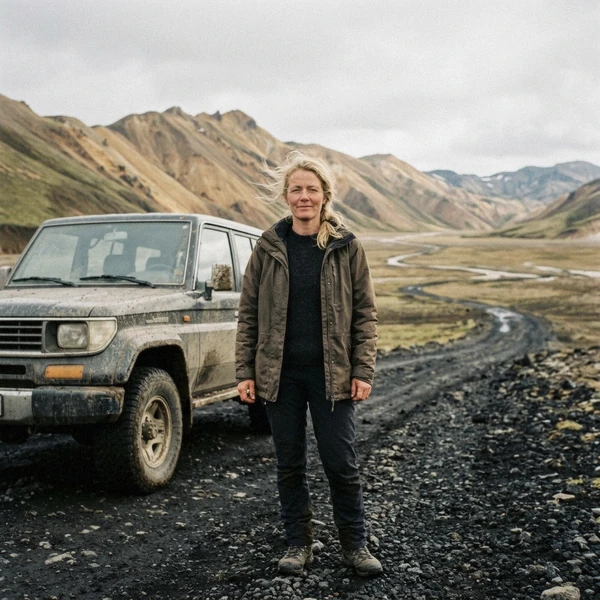
What to bring to Landmannalaugar starts from one fact: nothing is sold in the valley. No shop, no café, no vending machine, and the nearest supermarket is 75 minutes of gravel away in Hella. Whatever you want during the day has to arrive with you, and the list is shorter than most Iceland packing guides suggest: boots that can take obsidian, layers for 10°C with wind on top, waterproofs, a swimsuit, a towel and lunch. This page sets out why each of those is on the list, and what happens when it is not. What the guided Landmannalaugar tours do and do not hand you is covered further down.
Quick answer
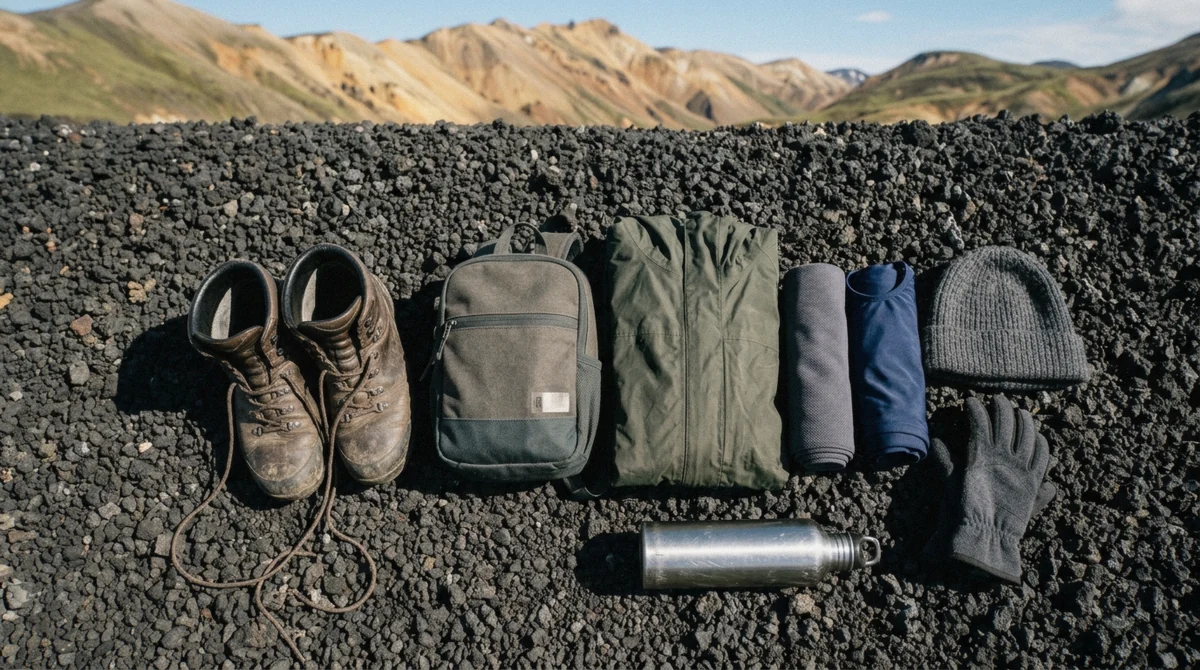
Bring hiking boots with ankle support, a waterproof jacket and over-trousers, warm layers underneath, a hat and gloves, a swimsuit and towel for the hot spring, and food and water for the whole day. Daytime highs in the valley sit around 10°C in July and August with wind that makes it feel colder, and there is nowhere to buy anything once you leave Hella. Most guided tours provide the vehicle and the guide and nothing else.
Key takeaways
- Boots, not trainers: the Laugahraun lava field is 550-year-old obsidian with edges that cut
- Waterproof jacket and over-trousers, even in a clear forecast, because highland weather turns inside an hour
- A swimsuit and towel for the pool, worn underneath if you would rather not change on an open boardwalk
- Lunch and water bought in Reykjavik or Hella: no tour includes food and nothing is sold in the valley
- Hat and gloves in August as much as in June, because wind is the thing that gets people, not temperature
- A dry bag or plastic bag for wet swimwear on the drive home
The Packing List
Everything you need for a day in the valley
This is the whole list for a guided day or a bus day. Add a sleeping bag and a stove to it if you are camping.
- Hiking boots with ankle support, ideally waterproof
- Waterproof jacket with a hood that stays on in wind
- Waterproof over-trousers, which matter more here than most people expect
- A warm mid layer: fleece or light down
- A base layer that moves moisture, not cotton
- Hat and gloves, packed regardless of the forecast
- Swimsuit and a towel, ideally a quick-drying one
- Lunch, snacks and at least a litre of water per person
- Sunglasses and sun cream, because the light off pale rhyolite is stronger than the temperature suggests
- A small daypack that can carry all of the above while you walk
- A dry bag or plastic bag for wet swimwear
- A card for the 1,100 ISK shower, and for parking if you are driving
What you do not need
Half of what generic Iceland lists recommend is dead weight for a day here, and the packing errors that matter are in twelve mistakes to avoid. You do not need crampons, walking poles are optional rather than useful on these gradients, and there is no reason to carry a full first-aid kit on a guided walk. Nobody needs a change of clothes unless they intend to swim twice.
You also do not need cash. The shower block and the parking both take cards, and nothing else in the valley charges for anything.
Where each item earns its place
Everything on the list solves a specific problem in this valley rather than a general Icelandic one.
| Item | Why here | What happens without it |
|---|---|---|
| Boots with ankle support | 550-year-old obsidian underfoot and 320 m of loose scree on Bláhnúkur | Cut soles, turned ankles, and a walk you cut short |
| Waterproof over-trousers | Rain on about a third of July and August days, with nothing to dry out in | Wet legs for the four-hour drive home |
| Hat and gloves | Wind across an open basin at 550 m, in August as much as June | The ridge becomes unpleasant long before it becomes cold |
| Swimsuit worn underneath | A boardwalk with a rail and no changing room | Changing in the open, in wind, in front of a queue |
| Quick-drying towel | A daypack and a long drive back | A wet cotton towel against everything else you packed |
| Lunch from Reykjavik or Hella | No shop, café or vending machine in the valley | A hungry afternoon and no way to fix it |
Why Boots, Specifically
The ground is volcanic glass
The trail out of the campsite climbs straight onto Laugahraun, a lava field pushed out by an eruption around 1477. What that means underfoot is obsidian: black, glassy, and broken into blocks with edges that genuinely cut. The path picks its way between them rather than being built over them.
Every operator on this route lists hiking shoes as required kit, and one states outright that proper hiking boots are required rather than recommended. That is not liability language. Trainers give you no ankle on the loose ground and no protection from the rock.
The second reason is scree. The climb up Bláhnúkur gains about 320 m on ground that moves under you, and the descent is where people without ankle support turn an ankle.
Waterproof matters more than the label suggests
Paths here hold water for days after rain, and there is nothing to dry out in once you are wet. A boot that keeps water out for the first hour is worth more than one that breathes well.
If your boots are new, wear them for a week before the trip. A blister at the top of Brennisteinsalda is two hours from the vehicle.
Dressing for the Weather You Will Actually Get
What to wear by month
Temperatures are typical daytime highs in the valley, which sits at 550 m and runs colder than the coast. The wind column is what decides how the day feels.
| Month | Typical high | What to wear | Extra |
|---|---|---|---|
| Late June | 9°C | Base layer, fleece, waterproof shell and trousers | Gloves and a hat: snow can still be lying in the gullies |
| July | 10°C | Base layer, light fleece, waterproof shell | Sun cream. Nineteen hours of daylight is a lot of exposure |
| August | 10°C | Base layer, light fleece, waterproof shell | The same, with slightly less rain than July |
| Early September | 7°C | Warmer mid layer under the shell | A warm layer for the walk back from the pool |
| October, super jeep only | 3°C | Full winter layering, insulated jacket | Hat, gloves and something dry to change into |
Wind is the variable that matters
A 10°C day in still air is pleasant walking weather. The same day with 15 m/s across the exposed flank of Brennisteinsalda is the reason guides carry spare layers and the reason they turn groups back from the Bláhnúkur ridge. Your shell needs a hood that stays up in that, which rules out most city rain jackets.
Rain falls on roughly a third of days in July and August, and it usually passes inside an hour. Over-trousers are what make that a non-event rather than a wet afternoon.
Which month you are packing for changes the answer more than anything else on this page. The full picture sits in the best time to visit Landmannalaugar.
Jeans are the standard mistake
Wet denim at 10°C in wind stops being funny quickly, holds water for hours and chafes on a two-hour walk. Anything synthetic or wool beats them. This is the single most common thing guides comment on when a group steps out of the vehicle.
The Hot Spring, and What It Asks You to Carry
Free, warm, and completely unequipped
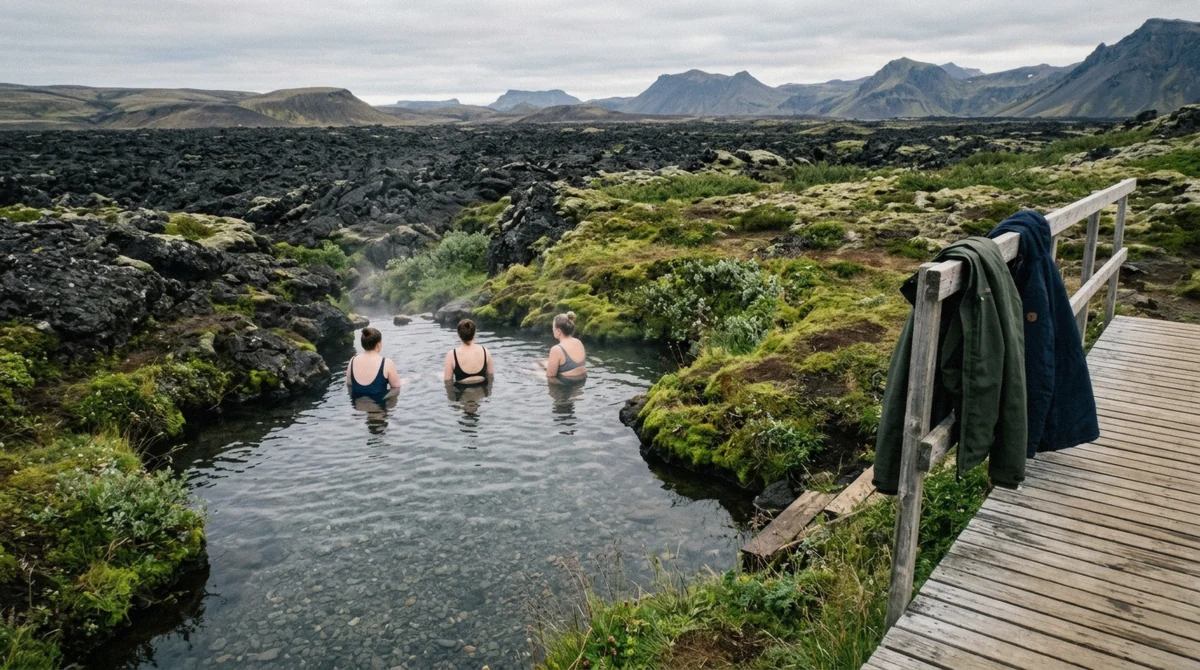
The pool sits a few minutes' walk from the campsite where a geothermal stream meets a cold one at the edge of the lava field. It runs 36 to 40°C, warmest near the lava where the hot water enters, and it costs nothing to use. It is knee to waist deep over gravel.
What it does not have is a changing room. There is a wooden boardwalk with a rail, and that is the entire infrastructure. In practice almost everyone wears a swimsuit under their hiking clothes and peels down to it at the rail, which also solves the problem of walking back to your things in an Icelandic wind.
A shower in the block by the campsite costs 1,100 ISK if you want one afterwards, and it takes a card.
The towel question
Bring one, and make it a small quick-drying one rather than a hotel bath towel. A wet cotton towel in a daypack for the four-hour drive home is the sort of small misery that a 200-gram microfibre towel prevents. Add a plastic bag for the swimsuit.
Food, Water and the Hella Rule
Nothing is sold in the valley
This is worth repeating because it catches people out on every kind of trip here. There is no café, no kiosk and no vending machine at Landmannalaugar. Food and drink sit in the excluded column on every guided listing, including the two that mention lunch in the same block.
The last place to buy anything is Hella, about 75 minutes short of the campsite, where there is a petrol station and a small supermarket. Every tour and the highland bus break there for around fifteen to twenty-five minutes. Buy in Reykjavik if you can, since the same lunch costs noticeably more at a petrol station. Anyone joining the day at Hella can shop two minutes from the meeting point, which the 8-hour Hella departure makes easy.
Water is easier: the campsite has drinking water, so you can fill a bottle once you arrive rather than carrying four hours of it.
What to actually pack for lunch
Something that survives a rough road and can be eaten standing up in wind. Bread, cheese and a chocolate bar beat anything that needs a fork. Add more snacks than you think you need if you are walking Bláhnúkur, because 320 m of ascent on cold ground burns through breakfast faster than expected.
Pack for Your Kind of Day
If You are on a guided day tour
Daypack with layers, waterproofs, lunch, water, swimsuit and towel. Nothing else fits in the time
If You are taking the highland bus
The same, plus more food: you have four to five hours rather than three and no vehicle to return to
If You are driving yourself
Add a card for parking, a full tank from Hella, and something dry to sit on for the drive back
If You are camping
Add a sleeping bag rated for near-freezing nights, a stove, and 3,400 ISK per adult per night
If You are staying in the hut
Add a sleeping bag: beds are bunks with a mattress, and the kitchen has stoves, pots and pans
If You are going in late June or October
Add full winter layers, a warm hat and gloves, and expect snow underfoot on the higher routes
What the Tours Provide, and What They Do Not
The vehicle, the driver, the guide, and that is mostly it
Guided days into the valley are transport with expertise attached rather than equipped expeditions. Every listing covers the vehicle, the driving and an English-speaking guide, and most carry Wi-Fi for the road. Three state that the Landmannalaugar parking and facility fee is covered; one states that entry to the bathrooms, showers and hot spring is at your own expense.
No operator lends boots, waterproofs or towels. One small-group jeep hands out bottled water and Icelandic snacks. Everything else on the list above is yours to bring, which is exactly the same as if you drove yourself.
Which tours cover which fees is set out in the full comparison of guided day tours and, in more detail, in what a Landmannalaugar trip costs.
Questions About What to Pack
Do you need hiking boots for Landmannalaugar?
Yes, and every operator lists them as required kit rather than a suggestion. The trail from the campsite crosses Laugahraun, a lava field of 550-year-old obsidian with sharp broken edges, and the climb up Bláhnúkur gains about 320 m on loose scree that moves underfoot. Ankle support matters more than tread. Trainers will get you to the hot spring and no further with any comfort, and waterproof boots are worth the extra because the paths hold water for days after rain.
What should you wear to Landmannalaugar in summer?
Layers under a waterproof shell. Daytime highs in July and August average around 10°C at 550 m, with overnight lows of 4 to 5°C, and wind is what decides how that feels. A moisture-moving base layer, a fleece or light down mid layer, a waterproof jacket with a proper hood and waterproof over-trousers cover every day the valley produces. Add a hat and gloves even in August. Avoid jeans, which hold water and chafe.
Do you need a swimsuit for the Landmannalaugar hot spring?
Yes, and it is easiest worn under your walking clothes. The pool is free and runs 36 to 40°C, but there is no changing room: a wooden boardwalk with a rail is the whole of the infrastructure. Bring a small quick-drying towel and a plastic bag for the wet swimsuit afterwards. A shower in the block by the campsite costs 1,100 ISK and takes a card.
Is food included on Landmannalaugar tours?
No. Food and drink sit in the excluded column on every guided listing, including the two whose inclusion lists mention lunch, and there is nothing to buy in the valley itself. The last shop is the supermarket in Hella, about 75 minutes short of the campsite, where every tour and the bus break for fifteen to twenty-five minutes. Buy lunch in Reykjavik if you can and treat the Hella stop as coffee. Drinking water is available at the campsite.
How much water should you carry?
At least a litre per person for the walk, and you can refill at the campsite, which has drinking water. There is no need to carry the whole day's supply from Reykjavik. If you are climbing Bláhnúkur or walking the full 9.7 km loop over both peaks, take more than you think and add snacks, because 320 to 610 m of ascent on cold ground burns through breakfast faster than a flat walk of the same length.
Can you rent gear at Landmannalaugar?
No. There is no rental desk, no shop and no operator lending boots, waterproofs or towels at the campsite. The mountain hut has a kitchen with gas stoves, pots and pans for guests who have booked a bed, and the shower block sells nothing beyond the 1,100 ISK shower. Whatever you plan to use during the day has to arrive with you, which is why the packing list matters more here than at a roadside stop on the south coast.
What do you need if you are camping rather than visiting for the day?
Everything on the day list plus a sleeping bag rated for nights near freezing, a stove and cooking kit, and the 3,400 ISK per adult per night campsite fee. The fee covers toilets, drinking water, a grill and a bench, with showers at 1,100 ISK. Tents and campervans both have marked spots. If you have booked a hut bed instead at 17,000 ISK, you still need a sleeping bag but the kitchen is provided.
Pack as if the weather will change once and the shop does not exist, because both are true. Boots, a shell, a warm layer, a swimsuit and lunch cover a normal day in the valley, and the things people regret leaving behind are almost always the over-trousers and the towel. Everything else is optional, and the hot spring at the end forgives a lot.